
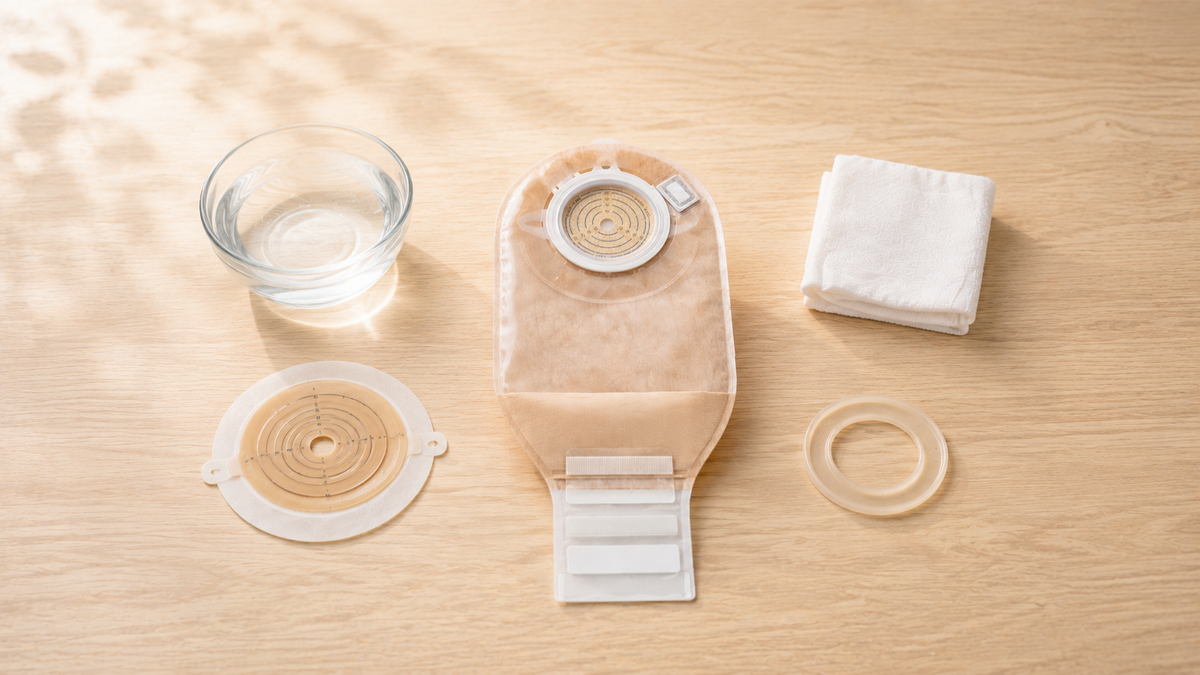
Learning how to care for a stoma takes time. Some practices may seem safer or more convenient at first, but they are not always the best choice for your stoma or peristomal skin.
Here are four common myths about ostomy pouching and skin care.
Myth 1: “The Skin Barrier Opening Only Needs to Be Roughly the Right Size”
If the opening is too large, output may come into contact with the peristomal skin and cause irritation. If it is too small, it may rub against or put pressure on the stoma.
What to do instead:
Make sure the opening fits closely around the base of the stoma without constricting it.
During the early weeks after surgery, the stoma may gradually become smaller as swelling decreases, so measure it regularly and adjust the opening when needed.
Myth 2: “If It Isn’t Leaking, I Don’t Need to Change It”
No visible leakage does not mean a pouching system can be worn indefinitely. Over time, the skin barrier and seal may gradually weaken.
What to do instead:
Develop a regular change routine based on your stoma, output, skin condition, and pouching system.
If you notice leakage, burning, itching, or loss of seal, change the system sooner rather than waiting for your usual change time.
Myth 3: “I Should Avoid Touching or Cleaning My Stoma”
A stoma may look delicate, but gentle cleaning is a normal part of ostomy care.
The stoma itself does not have the same pain sensation as normal skin, although the tissue is delicate and may bleed slightly if rubbed too firmly.
What to do instead:
Gently clean the stoma and surrounding skin with warm water and a soft cloth or gauze.
Make sure the peristomal skin is dry before applying a new pouching system.
Myth 4: “I Need to Disinfect My Stoma Every Time I Change My Pouch”
Routine ostomy care usually does not require antiseptic disinfection every time the pouching system is changed.
Products such as alcohol or iodine solutions may irritate the skin and are usually unnecessary for routine stoma care.
What to do instead:
For everyday care, warm water is usually enough to clean the stoma and surrounding skin unless a healthcare professional recommends otherwise.
Conclusion
Good ostomy care does not have to be complicated.
A well-fitted pouching system, gentle skin care, and a routine that works for your individual needs can help maintain a reliable seal and healthy peristomal skin.