
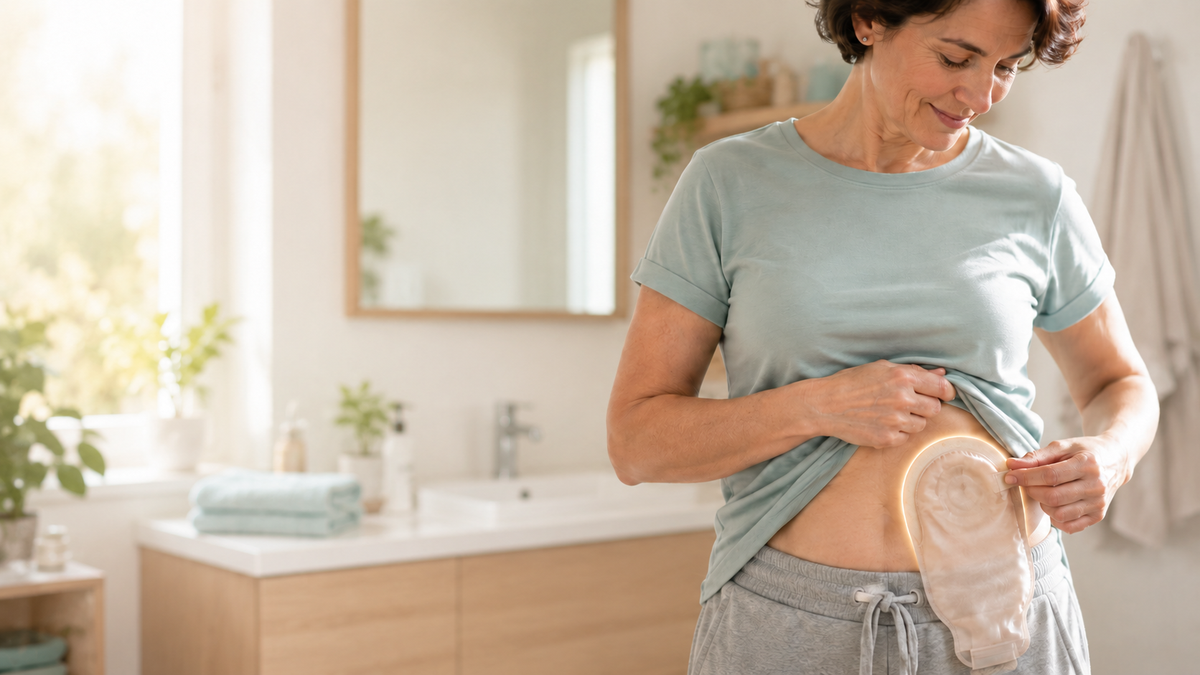
Why can some people wear their ostomy pouching system for several days, while others need to change theirs much sooner?
The answer is that wear time varies from person to person.
Although ranges such as 3–7 days are sometimes used as a general reference, they should not be treated as a fixed rule. What matters more is finding a predictable wear time that maintains a secure seal and keeps the skin around your stoma healthy.
The type of pouching system you use, the type of ostomy you have, your output, skin condition, daily activity, and other individual factors can all affect how long a pouching system stays secure.
Why Does Wear Time Vary From Person to Person?
1. Differences in Pouching System Type
Different types of pouching systems are used and changed in different ways.
For example, with a one-piece system, the pouch and skin barrier are combined into a single unit, so the entire system is removed when it is changed.
With a two-piece system, the pouch and skin barrier are separate. The pouch can be removed or replaced without taking off the skin barrier every time.
Because the two systems are designed and used differently, their change routines may also differ.
2. Differences in Ostomy Type
The type of ostomy can also affect wear time.
For example, ileostomy output is usually more liquid and more frequent, which may affect the skin barrier more quickly.
Colostomy output is often more formed, especially with descending or sigmoid colostomies. For some people, this may allow a longer wear time.
Even people with the same type of ostomy can have very different wear times.
So, what should actually determine when you change your pouching system?
What Really Determines When You Should Change Your Pouching System?
Rather than focusing only on how many days you have been wearing your pouching system, it is more important to pay attention to these practical factors.
1. Leakage or Skin Discomfort
Leakage is one of the key signs that your pouching system may need attention.
Burning, itching, soreness, or irritation around the stoma may also indicate that output has reached the skin or that the seal is beginning to fail.
If this happens, you do not need to wait until your usual change time.
2. Amount and Consistency of Output
Large amounts of output or very liquid output can affect the skin barrier more quickly.
More formed and predictable output may allow a longer wear time.
Changes in your usual output can also affect how long your pouching system can be worn securely.
3. Heat, Perspiration, and Daily Activity
Hot weather, exercise, and heavy sweating can affect adhesion and shorten wear time.
During warmer weather, periods of increased activity, or other situations that cause more perspiration, your usual change routine may need to be adjusted.
4. Skin Condition and Barrier Fit
Healthy peristomal skin and a well-fitted skin barrier are important for maintaining a reliable seal.
Body contours, skin folds, changes in stoma size, and the type of skin barrier being used can all influence wear time.
If your usual wear time suddenly becomes much shorter, or skin irritation keeps returning, it may be more helpful to review the fit of your pouching system with a stoma care nurse rather than simply changing it more frequently.
Signs You May Need to Change Your Pouching System Earlier
- Output has leaked underneath the skin barrier
- Burning, itching, soreness, or irritation develops around the stoma
- The skin barrier has lifted significantly and the seal is affected
- The pouch is damaged, punctured, or leaking
- The connection on a two-piece system becomes loose or cannot be secured properly
- A large area of the skin barrier has lost adhesion
If the skin around your stoma remains red, moist, broken, or painful, or if your usual wear time suddenly changes without an obvious reason, seek advice from a healthcare professional or stoma care nurse.
Conclusion
There is no single change schedule that works for everyone.
As you become more familiar with your own stoma and routine, you can gradually find a change schedule that helps maintain a secure seal while keeping the skin around your stoma healthy.